We went to Halifax expecting to bring two kitchens together for a night. Instead, we found a city already gathered around its own table, confident in what it had built and generous enough to pull up a few more chairs.
Written by Jennifer Tremblay
Photography by Fraser Harrop, Stamp Productions
At Mystic, you arrive at the edge of the Atlantic.
The dining room stretches out over Halifax Harbour, wrapped in glass and seemingly suspended between city and sea. At its centre, the open kitchen sits beneath a sweeping plaster ceiling designed to evoke the underside of a ship’s hull, a maritime reference abstract enough that you feel it before necessarily recognizing it. Beyond the windows, there is little need for metaphor. The harbour is simply there, immense and shifting, a constant presence at the table.
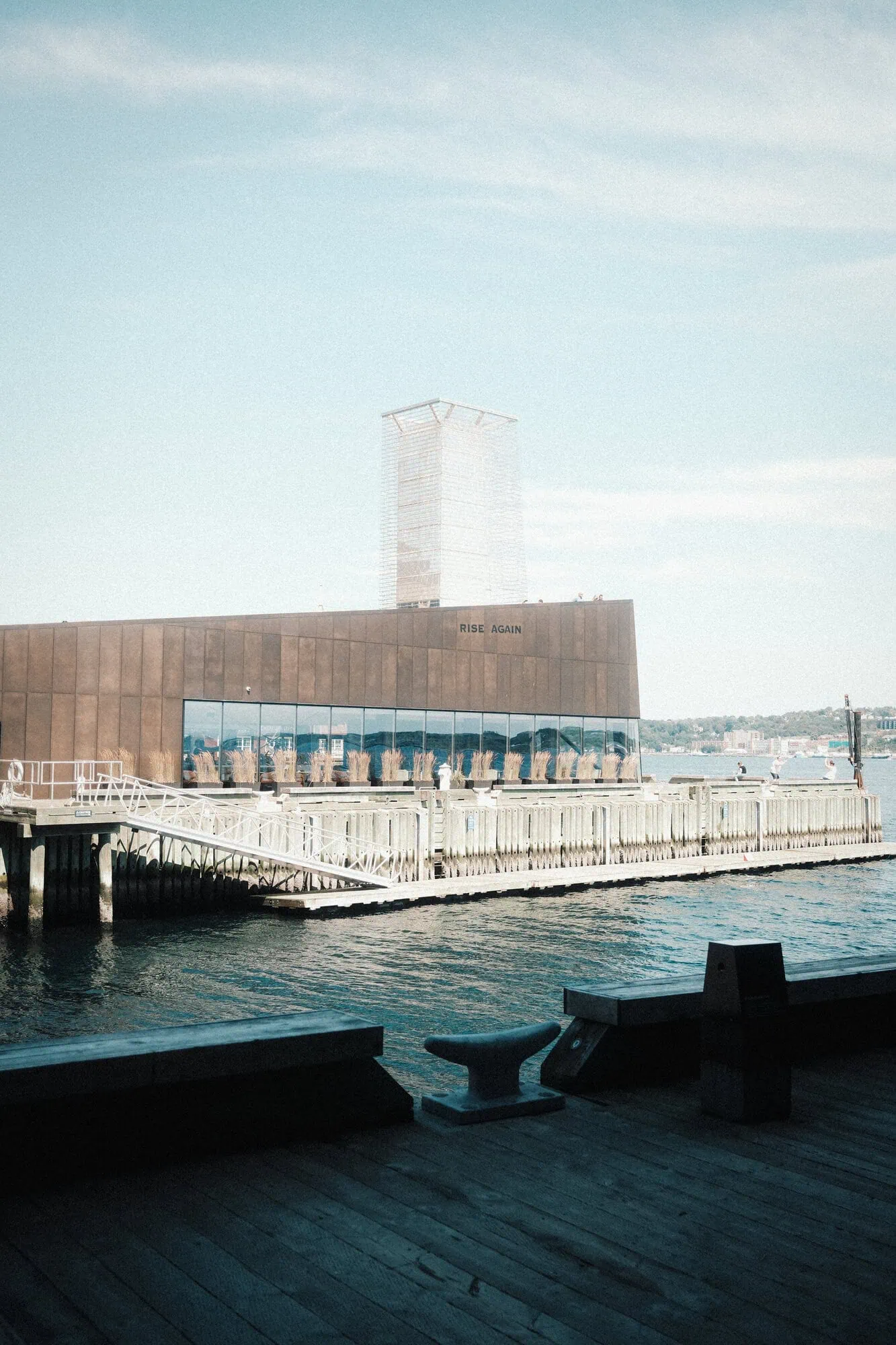
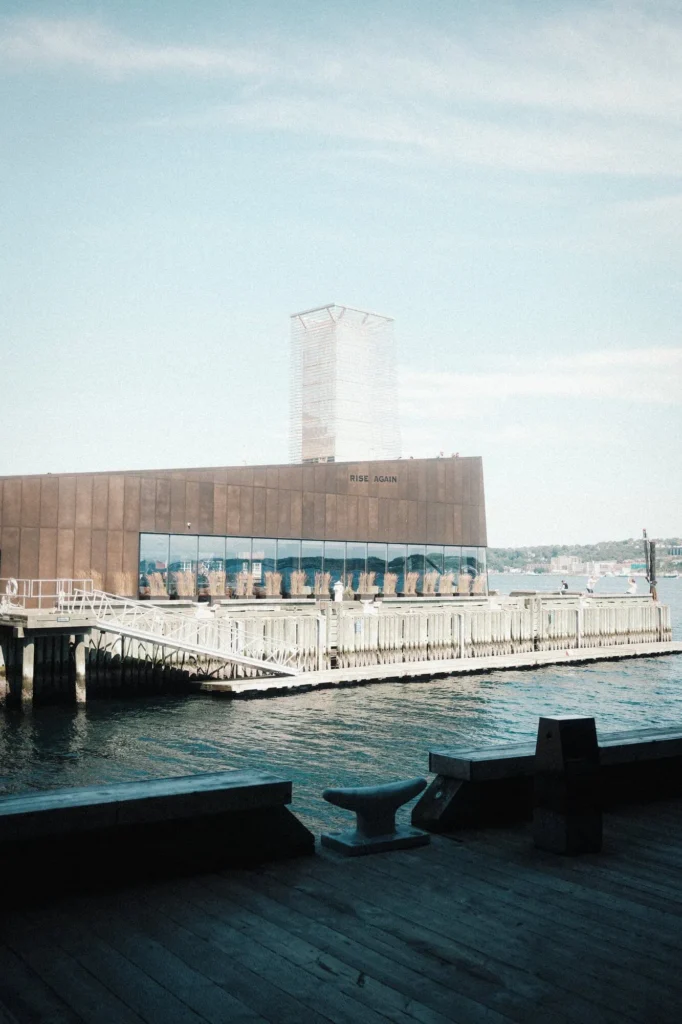
Mystic occupies the Rise Again structure at Queen’s Marque, the waterfront district conceived by MacKay-Lyons Sweetapple Architects. The larger development draws on Nova Scotia’s maritime history through locally quarried sandstone, reclaimed cobblestones and marine forms, while Rise Again itself climbs from the harbour like a vessel emerging from the water. Its roof rises as a public staircase toward the Tidal Beacon, an installation connected to the movement of the tides.
It is, quite simply, the kind of room and kitchen that chef dreams are made of.
On August 25, Mystic welcomed Vancouver’s ELEM for the Halifax edition of Air Canada’s Best New Restaurants Dining Series, presented by DINR. Chef Vish Mayekar crossed the country with sommelier Jayton Paul and Pranav Palande, his right hand in the kitchen, to cook alongside Mystic chef Malcolm Campbell and his team.
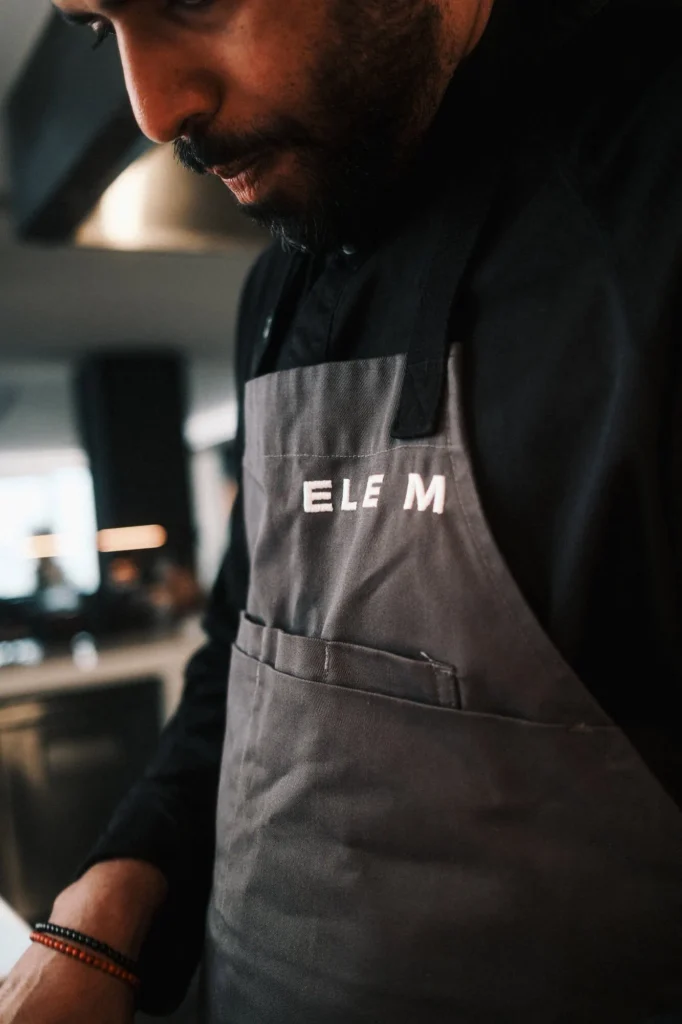
Nearly 6,000 kilometers separate Vancouver and Halifax, although distance quickly became one of the least significant things about the pairing. It was Vish’s first visit to Halifax, and he spent much of his time talking about when he could return, and before the first guest had even sat down for dinner, plans were already taking shape to get Malcolm onto a plane in the opposite direction and into ELEM’s Vancouver kitchen in the new year.
There is something wonderfully telling about a collaboration already plotting its sequel before anyone has even eaten.
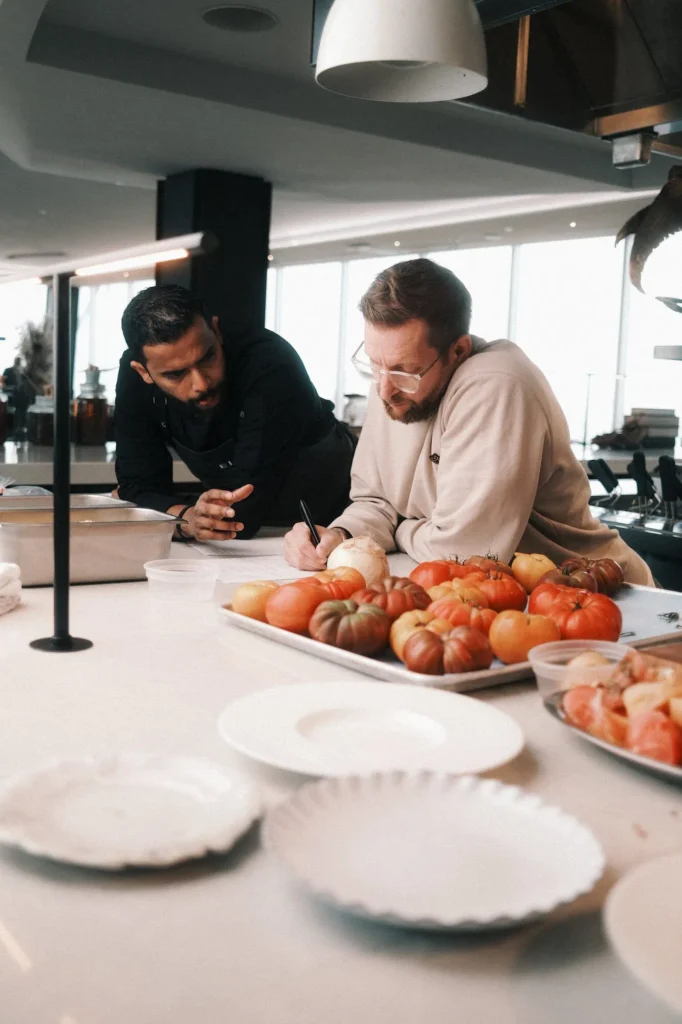
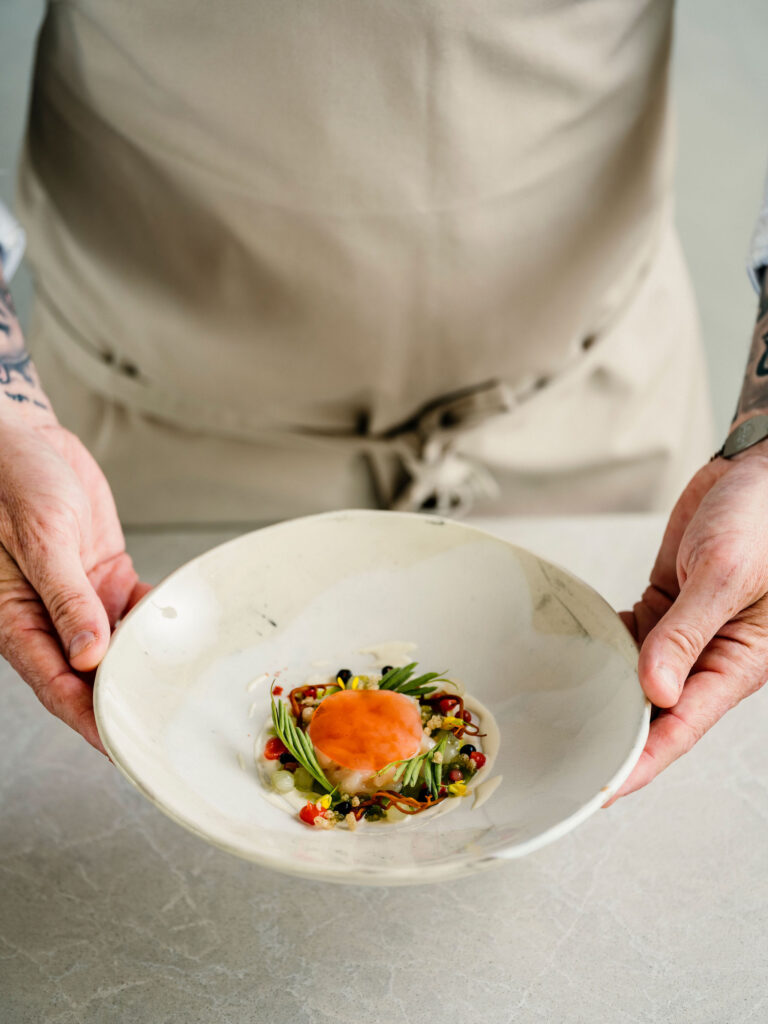
Dinner began with oyster and sea buckthorn, lobster tartelette, Dungeness crab croustade and beef and kimchi tartare, before settling into a menu in which each chef had clear authorship over individual courses without the evening ever feeling divided between two kitchens.
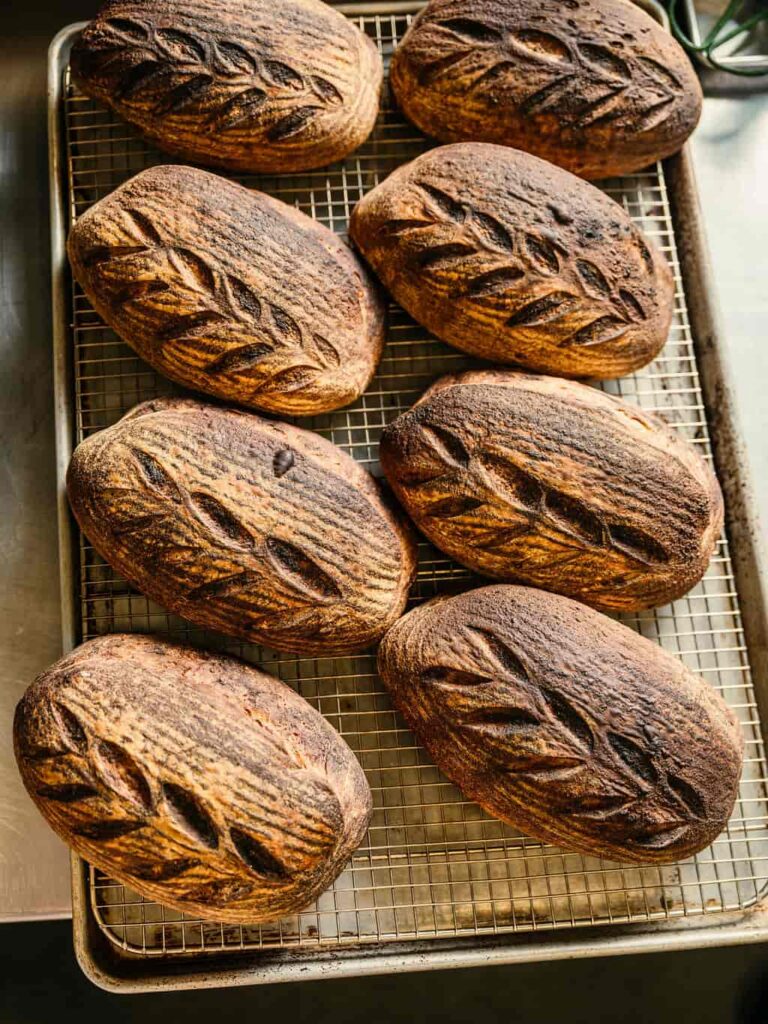
Vish’s tuna bhel layered puffed rice with cilantro-tamarind chutney, peanuts and semolina crackers, its crunch and acidity giving way to Mystic’s swordfish with smoked yolk, lardo and bonito cream, accompanied by Acadian caviar and seaweed brioche. ELEM’s tomatoes with burrata cream, sherry, pine nuts and colatura led naturally into Mystic’s 28-day-aged duck breast with gooseberry, endive rillette, hakurei turnip and Chambord jus. The final savoury course belonged to ELEM, tenderloin with shio koji, broccolini, tomato and gochujang jus.
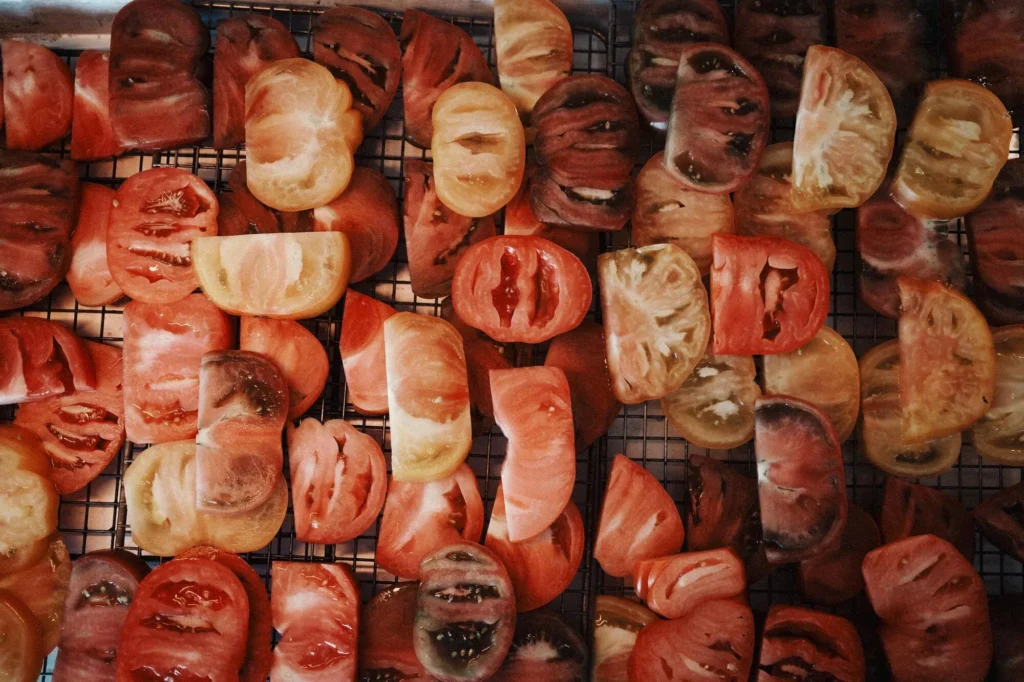
The menu moved fluently between two culinary languages, neither chef required to soften his style for the other. ELEM had travelled across the country and remained wholly itself; Mystic stayed rooted in the Atlantic ingredients and ideas at the heart of its cooking. The pleasure was not in watching one adapt to the other, but in discovering how naturally both could occupy the same conversation.
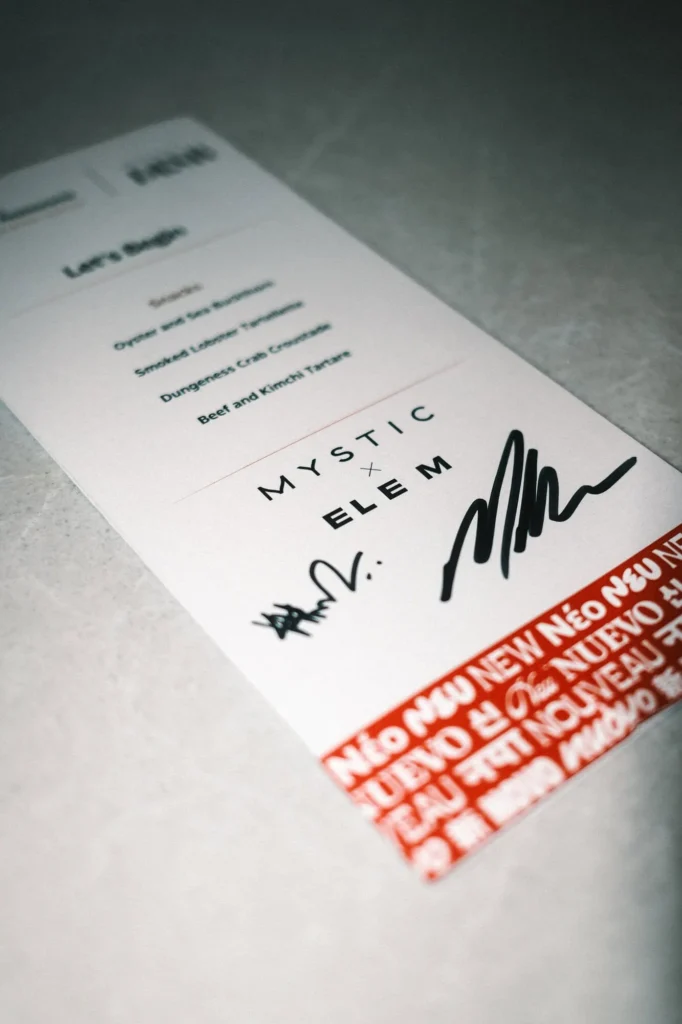
Mystic carried the menu to its close with pea and matcha, mint, cucumber, melon and elderflower sorbet, followed by bone marrow fudge, hazelnut financier, tahini white chocolate and a mango Tajín bar.
Long before dessert, though, another story had begun to reveal itself.
People knew one another.
You could sense it almost immediately as guests arrived. Names were called in recognition, familiar faces found each other across the room, old friends reunited and introductions folded into conversations already underway. This was not a collection of strangers assembled around a shared interest in food. It was a community that seemed deeply acquainted with itself, and the longer the evening went on, the more it felt as though Halifax had gathered itself around us and graciously made room.
There is something powerful about watching a city show up for its own culinary community that way, particularly in a dining room as ambitious as Mystic. We tend to speak about great restaurants as destinations, places worth crossing a country to experience, but their deeper value may be closer to home. They become part of a city’s social architecture, somewhere to celebrate and return to, to recognize people across a room and to feel that particular pride that comes when something exceptional also happens to be yours.
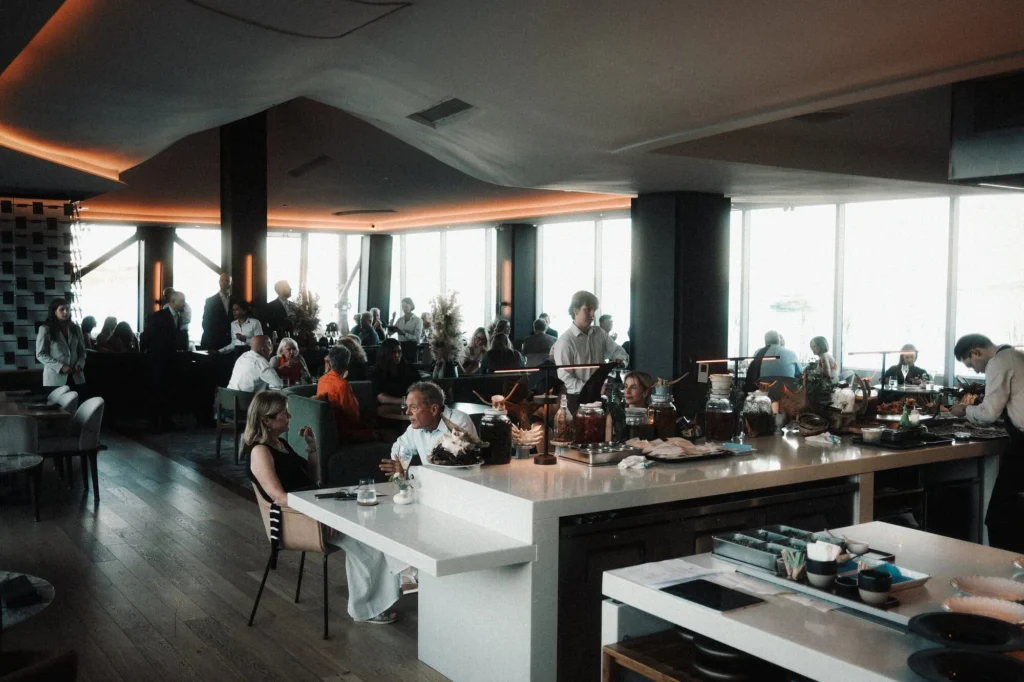
Perhaps this is what we get wrong when we talk about dining outside Canada’s largest cities. Too often, discovery is framed as though it requires someone from elsewhere to arrive and pronounce a scene worthy of attention.
Halifax did not feel remotely interested in waiting.
The talent was here. The room was full. The community knew one another. The discovery, perhaps, was ours.
Mystic makes a compelling argument for that confidence. Its architecture is ambitious without overwhelming what happens inside it, and despite its maritime references, nothing feels themed or overly literal. The Atlantic is simply present: in the ingredients, in the materials, in the changing light and through the glass. There is no need to insist upon where you are when the answer surrounds you.
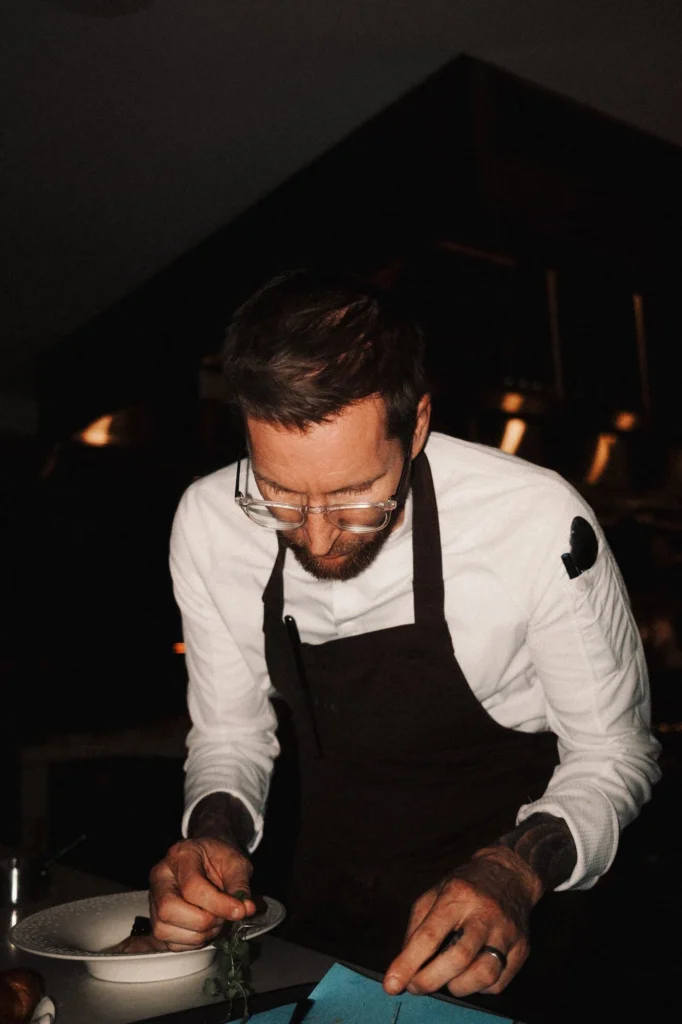
That same confidence seemed to connect the two kitchens. Neither needed to become anything else for the evening. ELEM could arrive from Vancouver with tamarind, shio koji and gochujang in its vocabulary; Mystic could speak through swordfish, Acadian caviar and seaweed brioche. One did not make the other more interesting. Their differences did.
Maybe that is the more interesting measure of distance between two cities. Not the kilometers between them, but how quickly people begin inventing reasons to cross them again.
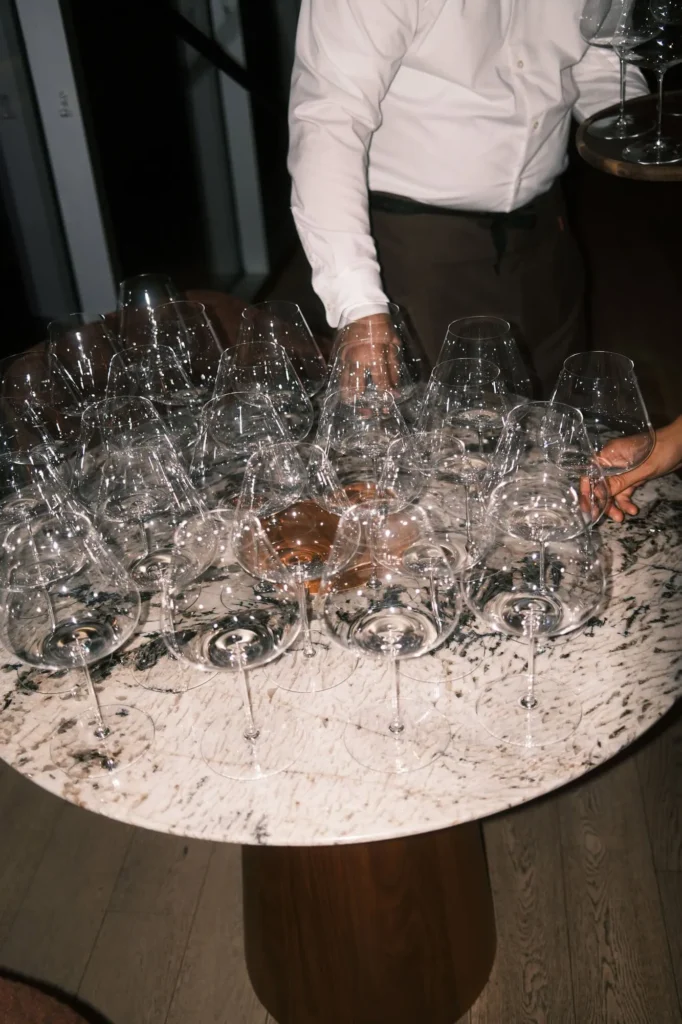
We went to Halifax expecting to bring two kitchens together for a night.
Instead, we found a city already gathered around its own table, confident in what it had built and generous enough to pull up a few more chairs.
By the end of dinner, Vish was still talking about coming back. A date was soft-circled for Malcolm’s landing in Vancouver and their teams had barely finished cooking together. The conversation had moved beyond what had just happened to what they might do next, and suddenly 6,000 kilometers felt next door.