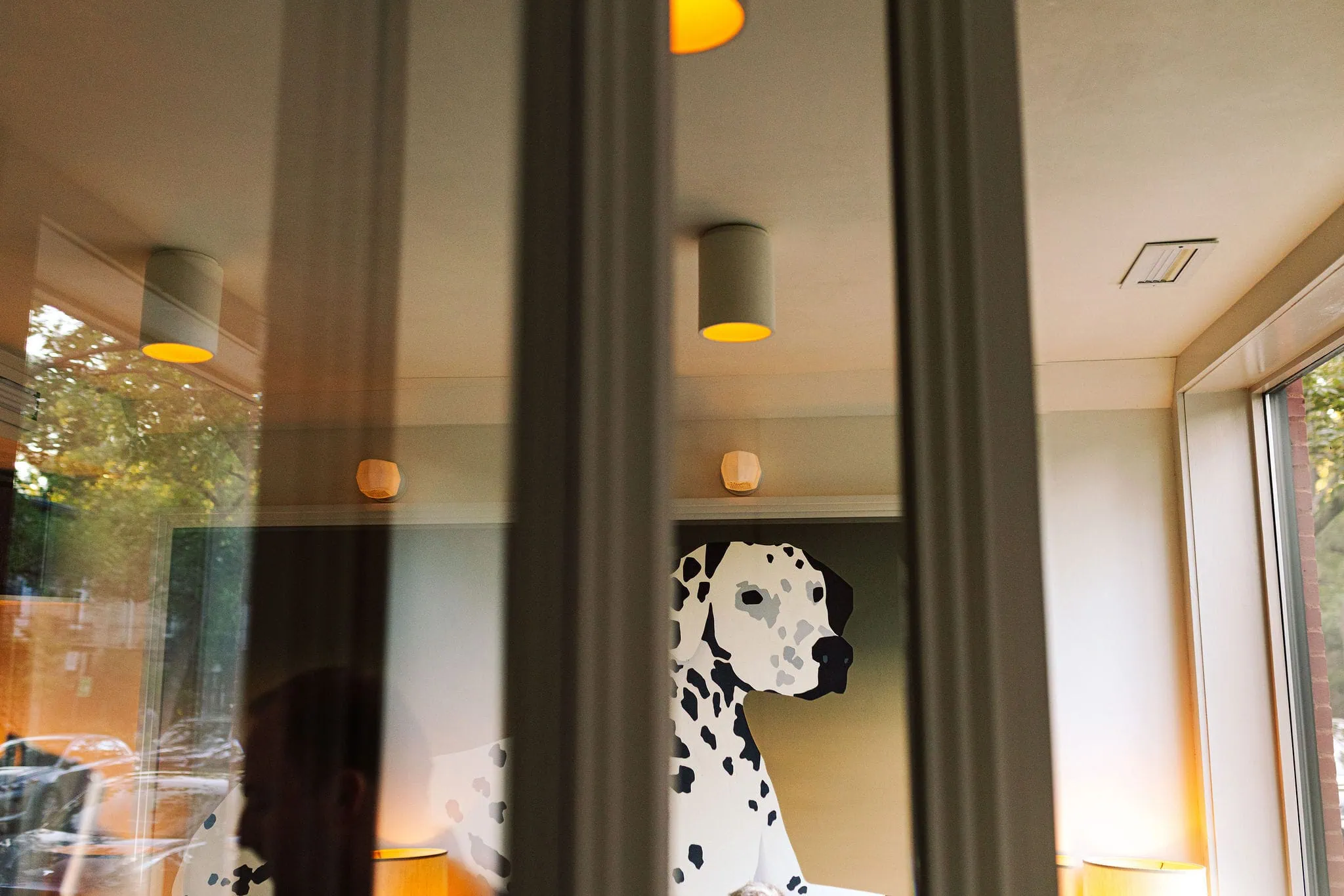
“The premise was simple: bring together two restaurants from the 2025 program, impose virtually no rules and see what happens. A chef’s creative playground.”
Written by Jennifer Tremblay
Photography by Pat Ozols
There is a particular kind of Montréal evening when nobody wants to go inside.
On August 19th, however, there was little indication that would be the case. The day began grey and rainy, the sort of weather that makes a patio feel aspirational. But sometime in the afternoon, the universe became unexpectedly cooperative. The clouds thinned, the air warmed and, by the time guests began arriving on rue Marquette, Montréal had given us one of those improbable late-summer evenings made sweeter by the fact that nobody had counted on it.
Le Violon sits on a residential corner in the Plateau-Mont-Royal, tucked just far enough from the city’s more obvious currents to feel like it’s a well-kept secret. Around it, neighbourhood life carries on: apartments above the street, bicycles against railings, people walking home. It is very Montréal in that way, discreet without being sleepy, polished without losing the feeling that it belongs first to the people who live around it.
Guests gathered on the streetside patio with glasses of bubbles in hand, lingering in the evening air before heading indoors for the fourth edition of Air Canada’s Best New Restaurants Dining Series, presented by DINR.
The premise was simple: bring together two restaurants from the 2025 program, impose virtually no rules and see what happens. A chef’s creative playground.
Le Violon, No. 2 on the 2025 list, was hosting Restaurant Limbo, a 2025 finalist, although “hosting” suggests a degree of formality that never really existed. The teams were already friends. There was no courtship required, no careful first dance. Someone had simply handed a group of very talented people who genuinely liked one another a kitchen, a dining room full of guests and permission to have some fun.
Music runs a little deeper through these kitchens than their playlists might suggest. Danny Smiles played violin as a child, an early musical connection that would eventually help give Le Violon its name. Years later, he played drums in Montréal indie band Broadcast Radio, touring across Canada. Limbo, meanwhile, was originally conceived in the spirit of a listening bar, and chef Harrison Shewchuk carries that musical life beyond the restaurant as a member of Montréal band Faze, newly returned from a European tour.
Watching the kitchen that night, the comparison was almost impossible to resist. This felt less like two bands learning to play together than friends who already knew the set list finally getting a stage to themselves.
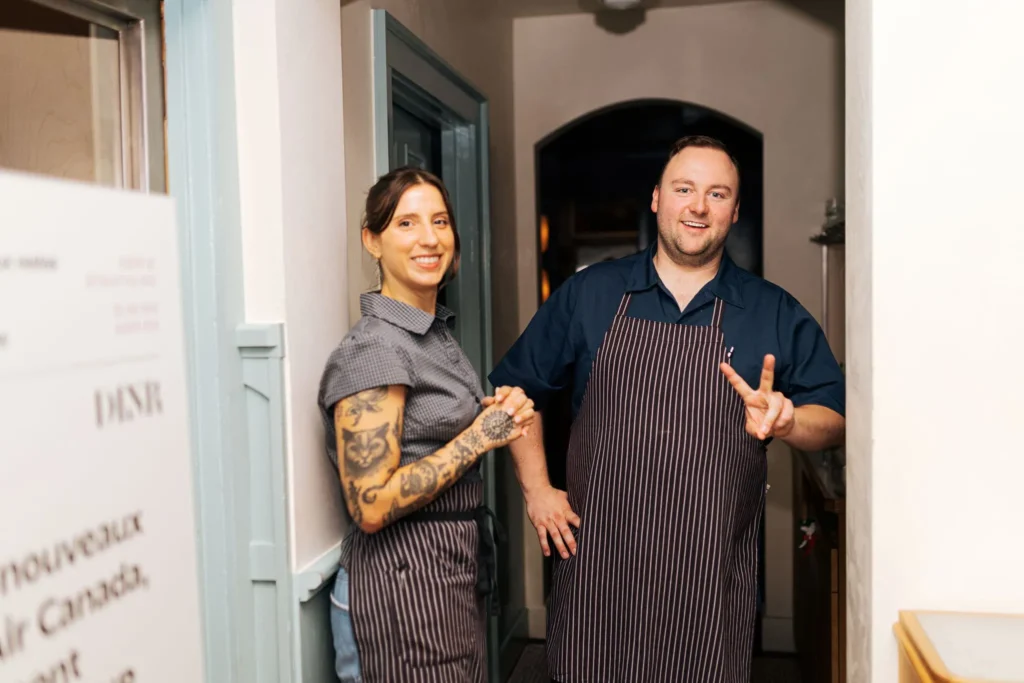
Danny Smiles and Mitch Laughren cooked alongside Limbo head chef Harrison Shewchuk, with both teams moving around one another with the shorthand of people already comfortable together. Tasting, plating, passing dishes, laughing and stepping in wherever they were needed, the scenes from the kitchen unfolded seamlessly.
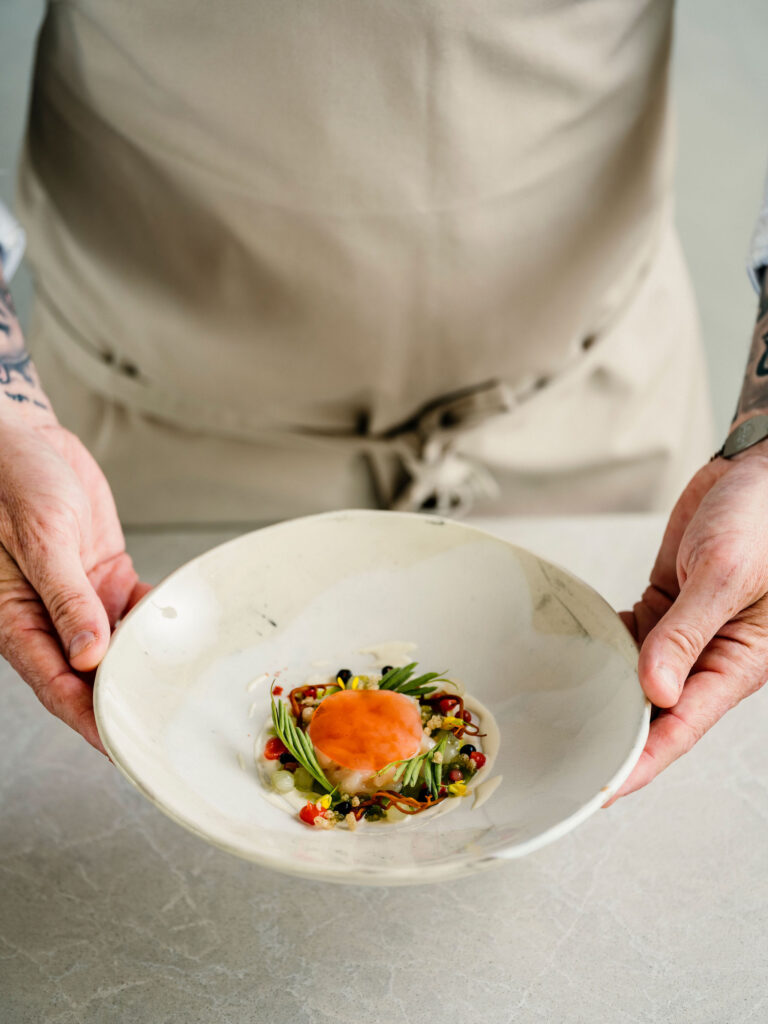
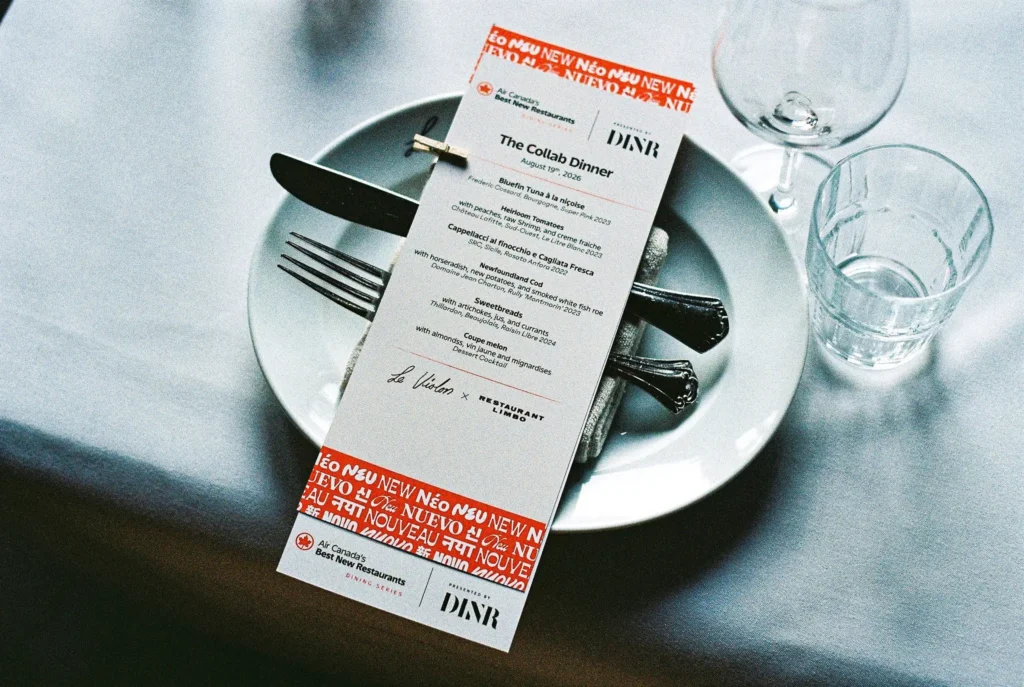
The menu mirrored that same casual confidence. Bluefin tuna arrived à la niçoise, paired with Frédéric Cossard’s Super Pink from Burgundy, followed by perhaps the most summery plate of the evening—and my personal favourite: heirloom tomatoes, peaches, raw shrimp and crème fraîche with Château Lafitte’s Le Litre Blanc. It tasted uncannily suited to the weather outside, all ripeness and brightness, as though the kitchen had somehow been privy to the afternoon’s change of plans.
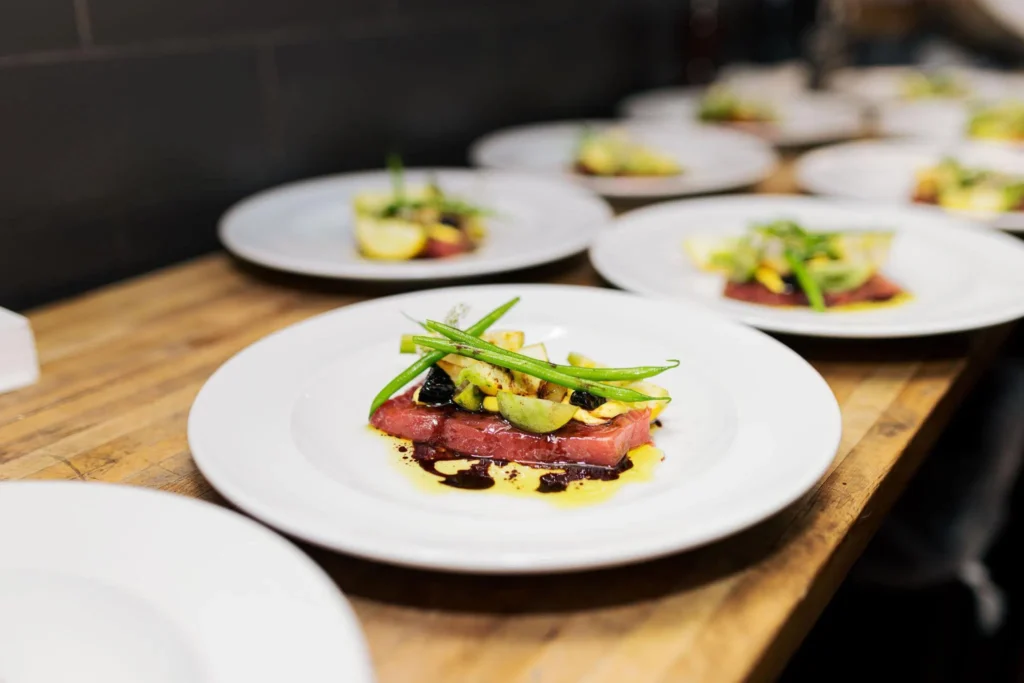
Cappellacci with fennel and fresh curd followed, then Newfoundland cod with horseradish new potatoes and smoked whitefish roe, paired with Domaine Jean Chartron’s Rully Montmorin. A generous portion of sweetbreads with artichokes, jus and currants came next, before melon, almonds and vin jaune drew the savoury progression gently toward its close. Mignardises and a dessert cocktail finished the menu.
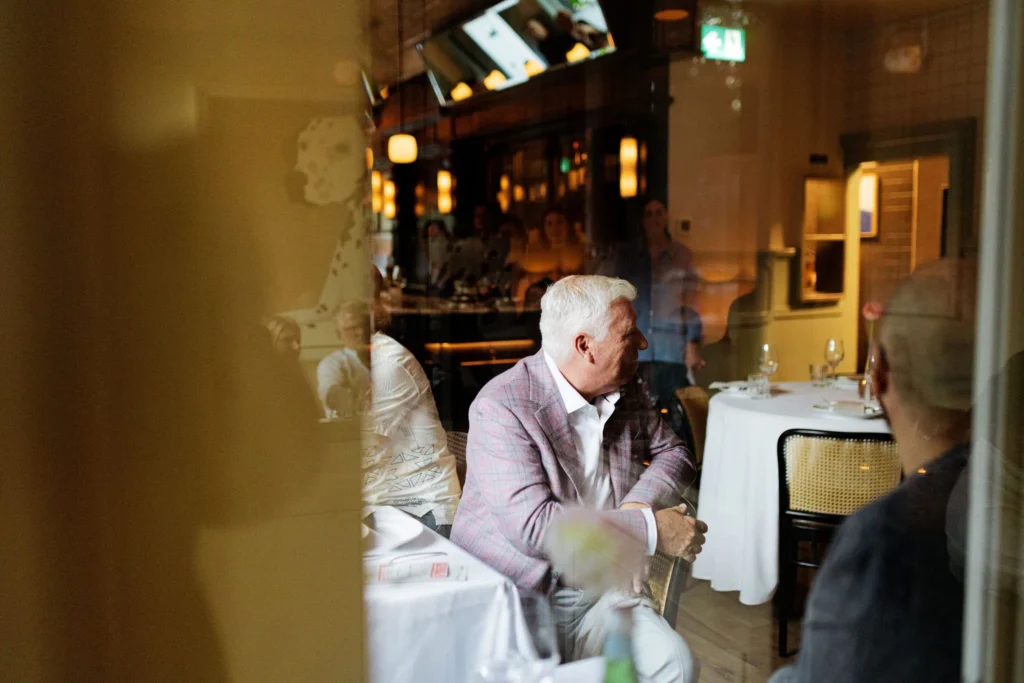
A menu, though, is only a record of what was served. The life of a dinner exists somewhere between the courses, in the room itself. Guests had dressed for the occasion. Conversations moved easily around the room. Glasses were replenished almost imperceptibly, and plates arrived with just enough choreography to betray the considerable work behind them without ever making the evening feel rehearsed. Le Violon has that rare balance of polish and ease, the sense that everything is being taken seriously except, perhaps, the people themselves.
As the evening unfolded, even the word “collaboration” began to feel too corporate. These are successful restaurants with distinct identities and points of view, but there is a particular freedom in giving talented friends an excuse to abandon the ordinary rhythm of service.
Air Canada’s Best New Restaurants has been introducing Canadians to restaurants at formative moments in their stories for more than two decades. What I love about evenings like this is what can happen after the introduction. Friendships deepen, kitchens are shared, ideas travel, and relationships that began around food find reasons to continue beyond it.
The final gesture of the evening felt particularly fitting. Le Violon partner and acclaimed Montréal artist Dan Climan had created a special-edition 12-by-16-inch poster for the collaboration, and as dinner wound down, every guest was given one to take home.
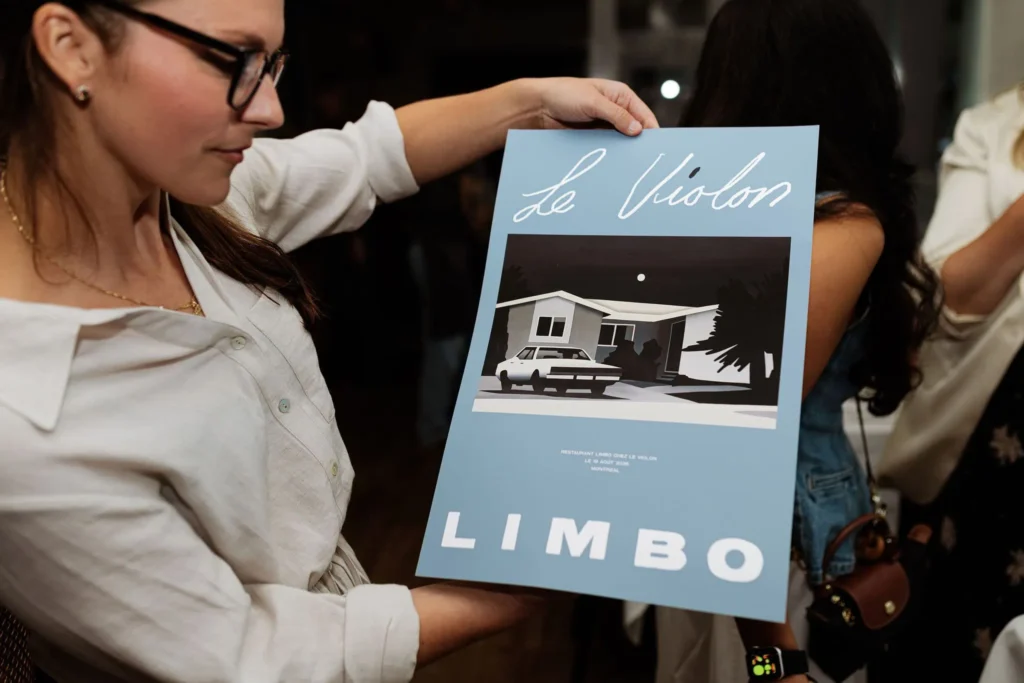
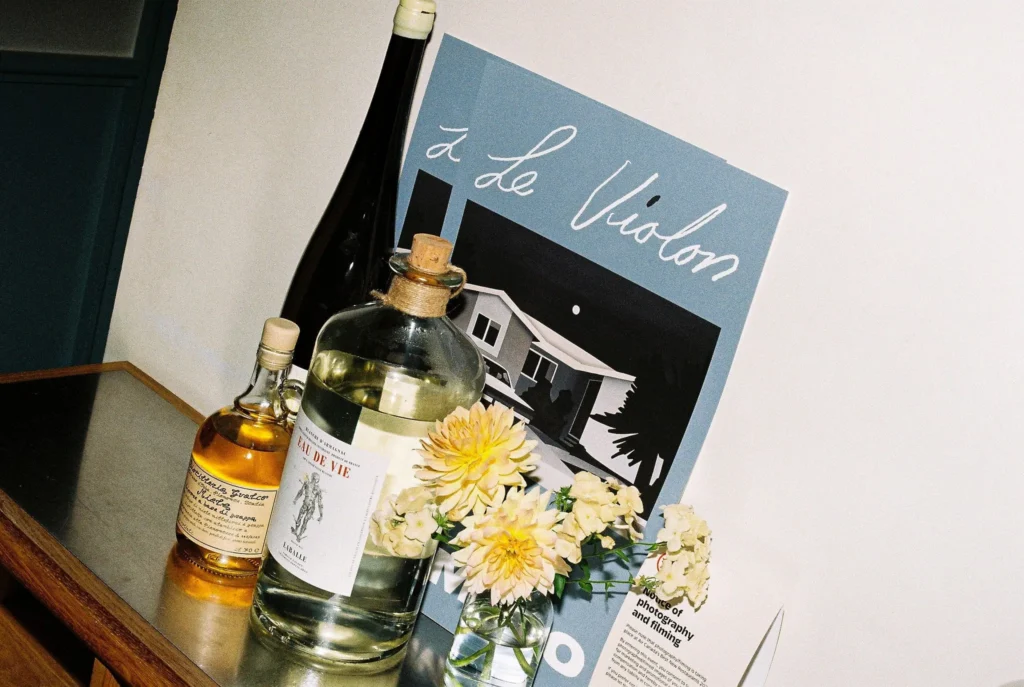
A beautiful plate exists for minutes, the bottle you loved is eventually empty, music stops and, sometime after the last guest leaves, the lights go out. Memory is usually left to preserve whatever mattered. That night, there was something else: an original work created for the occasion, destined for walls far beyond rue Marquette.
By the time the last plates had been cleared, the rain had returned and Ubers became increasingly theoretical, their arrival times stretching farther into the future each time someone refreshed a phone.
Nobody seemed particularly put out.
Guests lingered over the remains of their drinks. Old friends kept talking, new friendships were taking shape and the doorway became less of an exit.
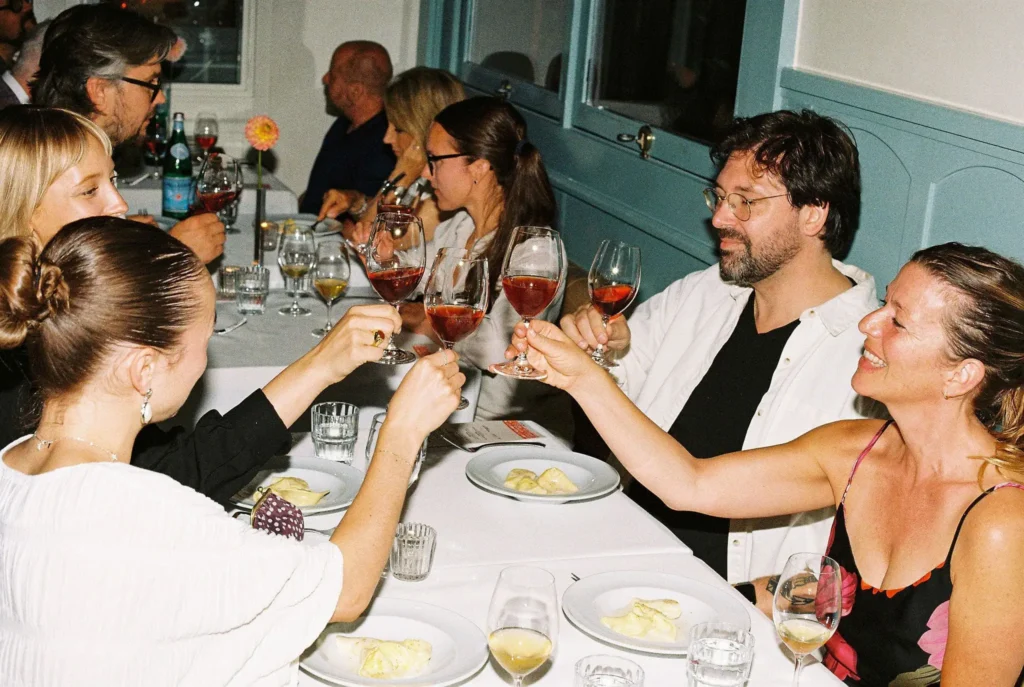
There is a point near the end of certain dinners when the evening slips away from the people who planned it. The kitchen begins to exhale, there is nothing left to serve and nowhere else the night is supposed to go, yet nobody quite leaves. All the work that went into creating an occasion has given way to something much harder to manufacture: people simply wanting to stay.
Eventually, the cars arrived. Conversations spilled onto rue Marquette goodbyes took longer than expected and Dan Climan posters disappeared carefully beneath jackets and umbrellas. A tangible piece of an evening that otherwise can only be remembered.
By morning, Le Violon and Limbo would return to their own kitchens, their own people, their own worlds. The room would be reset, the doors would open again and each would carry on being exactly what made us want to bring them together in the first place.
But for a few warm hours in between, the edges had all but disappeared.
After a day that had begun under grey skies and would end in pouring rain, Montréal had somehow given us the evening we wanted right when we needed it.
And, perhaps fittingly for this city, nobody seemed in much of a hurry to give it back.